
Zdrowa dieta odgrywa kluczową rolę w utrzymaniu zdrowia psychicznego. Liczne badania wskazują, że nawyki żywieniowe wpływają na funkcjonowanie mózgu, poziom energii, nastrój i skuteczność leczenia farmakologicznego. Niestety, osoby z chorobami psychicznymi często mają trudności z utrzymaniem zdrowego stylu życia, co może nasilać objawy depresji, schizofrenii, zaburzeń lękowych i innych schorzeń. W tej sekcji omówimy najczęstsze błędy żywieniowe, ich wpływ na zdrowie psychiczne oraz przykłady działań, które pracownicy socjalni i specjaliści mogą podjąć, aby wspierać pacjentów.
Żywność ultraprzetworzona i jej wpływ na zdrowie psychiczne
Żywność ultraprzetworzona, taka jak fast food, chipsy, dania gotowe i napoje słodzone, zawiera dużo tłuszczów trans, sztucznych konserwantów i dodatków, a jednocześnie ma niską wartość odżywczą. Pacjenci z chorobami psychicznymi często sięgają po tego typu produkty, ponieważ są łatwe w przygotowaniu i dostępne w niskiej cenie. Nadmierne spożycie takiej żywności negatywnie wpływa na zdrowie psychiczne, ponieważ przyczynia się do:
Zwiększony stan zapalny – tłuszcze trans i sztuczne dodatki do żywności mogą upośledzać funkcjonowanie mózgu i nasilać objawy depresji;
Niedobory witamin z grupy B, kwasów tłuszczowych omega-3 i magnezu, które mogą prowadzić do zwiększonej drażliwości i spadku energii;
Zaburzenia mikrobiomu jelitowego – jelita mają bezpośredni wpływ na zdrowie psychiczne, a dieta uboga w błonnik i probiotyki może nasilać objawy depresji i lęku.
Żywność ultraprzetworzona (UPF) to produkty poddawane intensywnej obróbce przemysłowej i zawierające dodatki poprawiające smak, teksturę i przedłużające trwałość, takie jak konserwanty, emulgatory, wzmacniacze smaku, sztuczne barwniki i substancje słodzące. Kategoria ta obejmuje słodzone napoje, dania gotowe, wysoko przetworzone przekąski, słodycze i produkty instant. Produkty te charakteryzują się zazwyczaj wysoką zawartością kalorii, tłuszczów nasyconych, soli i cukrów, a jednocześnie niską zawartością błonnika i niezbędnych składników odżywczych (Lane i in., 2024).
Badania pokazują, że dieta bogata w żywność ultraprzetworzoną wiąże się ze zwiększonym ryzykiem zaburzeń psychicznych, takich jak depresja i lęk. Metaanaliza wykazała, że wyższe spożycie żywności ultraprzetworzonej zwiększa ryzyko zaburzeń lękowych o 48%, a zaburzeń depresyjnych o 22% (Lane i in., 2024). Ponadto spożywanie produktów ultraprzetworzonych negatywnie wpływa na jakość snu, co może dodatkowo pogarszać samopoczucie psychiczne.
Naukowcy przeprowadzili badanie, analizując dietę ponad 14 000 osób pod kątem ryzyka wystąpienia problemów z pamięcią. Uczestników podzielono na grupy w zależności od ilości spożywanej żywności ultraprzetworzonej (Bhave i in., 2024).
✔ Osoby spożywające więcej żywności przetworzonej miały wyższe ryzyko problemów z pamięcią i koncentracją. Już 10% wzrost spożycia takich produktów zwiększał ryzyko zaburzeń pamięci o 16%.
✔ Osoby, które spożywały więcej naturalnej, nieprzetworzonej żywności (np. warzywa, owoce, produkty pełnoziarniste) miały mniejsze ryzyko problemów z pamięcią (Bhave i in., 2024)

Dieta bogata w UPF (żywność ultraprzetworzoną) wiąże się ze zmniejszeniem objętości niektórych obszarów mózgu, zwłaszcza tych zaangażowanych w regulację emocji i podejmowanie decyzji (np. zakrętu obręczy i ciała migdałowatego). Sugeruje to, że spożywanie dużych ilości żywności przetworzonej może wpływać na strukturę i funkcję mózgu (Contreras-Rodriguez i in., 2023).
Dlaczego żywność wysoko przetworzona może negatywnie wpływać na mózg?
Produkty ultraprzetworzone często zawierają:
Duże ilości cukru i tłuszczów trans mogą powodować zapalenie mózgu, upośledzać pamięć i koncentrację.
Sztuczne dodatki i konserwanty, z których niektóre mogą negatywnie wpływać na układ nerwowy.
Niski poziom niezbędnych składników odżywczych, brak witamin i minerałów potrzebnych do prawidłowego funkcjonowania mózgu.
AKTYWNOŚĆ INTERAKTYWNA 29
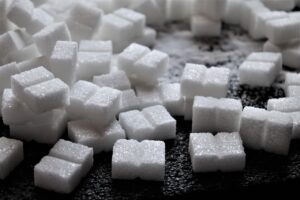
Nadmierne spożycie cukru
Pacjenci z zaburzeniami psychicznymi często sięgają po napoje słodzone, ciasteczka, czekoladę i inne produkty bogate w cukier, ponieważ mogą one tymczasowo poprawić nastrój.
Niestety, efekt ten jest krótkotrwały, a z czasem nadmierne spożycie cukru prowadzi do upośledzenia funkcji mózgu. Osoby z poważnymi chorobami psychicznymi, takimi jak schizofrenia czy choroba afektywna dwubiegunowa, często charakteryzują się wysokim spożyciem cukru, szczególnie w postaci napojów słodzonych cukrem (SSB) oraz herbaty/kawy z dodatkiem cukru (Lambert i in., 2024).
Badania wykazały, że osoby korzystające z opieki psychiatrycznej spożywają nawet cztery razy więcej cukru w napojach niż populacja ogólna.
Może to prowadzić do pogorszenia stanu zdrowia fizycznego i psychicznego.
Najważniejsze wnioski (Lambert i in., 2024):
• 66% pacjentów spożywało co najmniej jeden napój słodzony lub herbatę/kawę z dodatkiem cukru tygodniowo.
• 56,5% pacjentów regularnie piło napoje słodzone (np. colę, napoje energetyczne, soki z dodatkiem cukru).
• 35,4% pacjentów spożywało kawę lub herbatę z cukrem.
• Średnie dzienne spożycie cukru dodanego wynosiło 86,2 g/dzień, co znacznie przekracza zalecane normy.
Czy osoby chore psychicznie spożywają więcej napojów słodzonych cukrem?
- Niska świadomość zdrowotna – Osoby z poważnymi zaburzeniami psychicznymi często zdają sobie sprawę z zagrożeń związanych z paleniem tytoniu i piciem alkoholu, ale mają ograniczoną wiedzę na temat diety i zdrowia metabolicznego. Badania pokazują, że osoby o niższej świadomości zdrowotnej częściej spożywają napoje słodzone.
- Wpływ leków przeciwpsychotycznych – niektóre leki stosowane w leczeniu schizofrenii mogą zwiększać ochotę na słodkie pokarmy.
- Tymczasowa poprawa nastroju – Cukier stymuluje produkcję dopaminy, co prowadzi do chwilowego poczucia nagrody i poprawy nastroju. Jednak po tym następuje spadek energii i pogorszenie nastroju (Lambert i in., 2024).
- Easy access and low cost – Sugary drinks are inexpensive, widely available, and require no preparation, making them more appealing to individuals with limited income.
Czy cukier może zwiększać ryzyko depresji?
Badania nad związkiem między spożyciem cukru a depresją przyniesionych wyników. Określona analiza danych z Narodowego Badania Zdrowia i Odżywiania (NHANES), przeprowadzonego wśród 18 439 dorosłych w obrębie poszczególnych, wyodrębnionych, że wyższe poziomy cukru są odłączone ze względu na wykluczenie. W szczegółowym badaniu:
- Każde dodatkowe 100 g cukru dziennie zwiększało ryzyko depresji o 28%.
- Związek ten pozostał istotny nawet po uwzględnieniu takich czynników jak wiek, płeć, poziom dochodów, stan zdrowia i styl życia (Zhang i in., 2024).
Badania sugerują, że dieta bogata w cukier może stanowić czynnik ryzyka występowania problemów ze zdrowiem psychicznym. Systematyczny przegląd badań z udziałem 1 212 107 uczestników z 40 różnych badań wykazał, że wysokie spożycie cukru wiązało się z 21% wzrostem ryzyka depresji, podczas gdy jego wpływ na zaburzenia lękowe pozostaje niejasny. Cukier może pogarszać zdrowie psychiczne poprzez wahania poziomu glukozy we krwi, przewlekły stan zapalny, zaburzenia mikrobiomu jelitowego i wpływ na neuroprzekaźniki (Xiong i in., 2024). Podkreśla to, że pracownicy socjalni mogą wspierać pacjentów w ograniczaniu spożycia cukru, edukować ich na temat jego wpływu na zdrowie psychiczne i zachęcać do zdrowszego stylu życia. Uważne podejście do diety może być ważnym elementem w zapobieganiu depresji i poprawie ogólnego samopoczucia osób z zaburzeniami psychicznymi.
Czy cukier wpływa na zaburzenia lękowe?
Należy zauważyć, że ogólna analiza wyników badań naukowych nie wykazała istotnego związku między cukrem a ryzykiem wystąpienia zaburzeń lękowych. Jednak w niektórych podgrupach (np. w badaniach z mniejszą liczbą uczestników) zaobserwowano tendencję wskazującą na możliwy wpływ cukru na zwiększone ryzyko wystąpienia lęku. Konieczne są dalsze badania w celu jednoznacznego określenia tej zależności (Xiong i in., 2024).
W jaki sposób pracownik socjalny może pomóc pacjentom ograniczyć spożycie napojów słodzonych?
- Proste pytania dotyczące diety. Ponieważ pacjenci chorzy psychiatrycznie często mają trudności z dokładnym opisaniem swojej diety, pomocne może okazać się zapytanie o spożycie napojów gazowanych i energetycznych, które są łatwiejsze do zapamiętania.
- Przykładowe pytanie: „Ile napojów słodzonych spożywasz tygodniowo?”
- Edukacja na temat skutków nadmiernego spożycia cukru. Pomocne jest proste wyjaśnienie pacjentom, np. „Jedna puszka coli zawiera około 10 łyżeczek cukru – to więcej niż zalecane dzienne spożycie”.
- Encouraging alternatives, such as:
- Woda z cytryną lub miętą zamiast coli;
- Niesłodzona herbata owocowa zamiast napojów energetycznych;
- Stopniowe zmniejszanie ilości cukru w kawie i herbacie.
- Współpraca z psychologami i specjalistami od uzależnień – Osoby z podwójną diagnozą (zaburzenia zdrowia psychicznego + uzależnienie od alkoholu) wymagają kompleksowego wsparcia ze strony specjalistów.
- Pomoc w planowaniu prostych zmian. Celem nie jest całkowita eliminacja cukru od razu – stopniowe ograniczanie spożycia słodkich napojów może przynieść długoterminowe korzyści. Możesz na przykład zasugerować ograniczenie spożycia słodkich napojów do dwóch razy w tygodniu zamiast codziennie.
Współpraca z lekarzami i dietetykami. W przypadku braku dietetyka, spożycie napojów słodzonych może być traktowane jako wskaźnik ryzyka dietetycznego, co może sygnalizować potrzebę większej interwencji (Lambert i in., 2024).
AKTYWNOŚĆ INTERAKTYWNA 30
| Bibliografia |
| Zhang, L., Sun, H., Liu, Z., Yang, J. i Liu, Y. (2024). Związek między spożyciem cukru w diecie a depresją u dorosłych w USA: badanie przekrojowe z wykorzystaniem danych z Narodowego Badania Zdrowia i Odżywiania 2011–2018. BMC Psychiatry, 24(1), 110. https://doi.org/10.1186/s12888-024-05531-7 Xiong, J., Wang, L., Huang, H., Xiong, S., Zhang, S., Fu, Q., Tang, R. i Zhang, Q. (2024). Związek spożycia cukru z ryzykiem depresji i lęku: przegląd systematyczny i metaanaliza. Frontiers in Nutrition, 11, 1472612. https://doi.org/10.3389/fnut.2024.1472612 Lambert, T. J., Jay, M., Hennessy, E., Smith, K. i Sureshkumar, P. (2024). Spożycie napojów słodzonych cukrem u osób z ciężkimi zaburzeniami psychicznymi: badanie kohortowe w społeczności. Journal of Multidisciplinary Healthcare, 17, 5887–5899. https://doi.org/10.2147/JMDH.S479281 |
Alcohol consumption
People with mental health disorders are more likely to consume alcohol in a risky manner, which can lead to a deterioration in their health and difficulties in daily functioning. Therefore, it is crucial that social workers are aware of this issue and support their clients in finding healthier ways to cope with mental health challenges (Guckel et al., 2022).
Why are people with mental health problems particularly vulnerable to the effects of alcohol–medication interactions?
People with mental health disorders often take psychotropic medications (e.g. antidepressants, anti-anxiety drugs, antipsychotics) that act on the central nervous system. When combined with alcohol, they can cause serious side effects (Cheng et al., 2018).
Alcohol can affect medications in two ways:
- altering drug metabolism – It can weaken or enhance the effects of medications, leading to unpredictable outcomes;
- enhancing the effects of medications on the nervous system – This can cause increased drowsiness, dizziness, impaired concentration and coordination, and may even lead to loss of consciousness (Cheng et al., 2018).
What are the consequences of combining alcohol with psychotropic medications?
- worsening of mental health symptoms – Alcohol can intensify depression, anxiety, and may even trigger psychotic episodes.
- unpredictable side effects – These may include excessive drowsiness, breathing difficulties, heart rhythm disturbances, and in extreme cases – coma or death.
- risk of hospitalisation – Individuals who combine alcohol with medications are more likely to be hospitalised due to worsening illness or health complications.
reduced treatment effectiveness – Chronic alcohol use can impair the way medications work or cause them to be eliminated from the body more quickly (Cheng et al., 2018).
Are clients/patients aware of the risks?
Studies show that the majority of patients (75%) received information from a doctor or pharmacist about the interactions between alcohol and psychotropic medications (Cheng et al., 2018). However:
- only half of the patients follow the recommendations to avoid alcohol;
- nearly 1 in 4 people (23%) have experienced serious side effects after consuming alcohol while taking medication;
- patients most often consider doctors the best source of information on interactions, but they do not always follow their advice.
Why do people with mental health problems turn to alcohol?
Research confirms that individuals suffering from common mental health disorders such as depression, anxiety, or phobias are twice as likely to struggle with alcohol misuse compared to those without such conditions. This indicates a strong link between mental health issues and risky alcohol consumption (Puddephatt et al., 2022). People with mental health disorders often use alcohol as a way to cope with emotional difficulties. This may stem from several factors:
- desire to relieve stress and anxiety – Alcohol has a temporary relaxing effect, which may provide relief for individuals dealing with depression, anxiety, or other mental health challenges.
- attempt to improve mood – Those with depression or other conditions may use alcohol to feel better. While alcohol may offer short-term mood enhancement, it ultimately worsens the situation in the long run.
- avoiding symptoms of illness – Some individuals drink to dull symptoms such as agitation, anxiety, or intrusive thoughts. For example, those with social anxiety may drink before social events to feel more at ease, while those with depression may use alcohol as a “remedy” for their mood.
- environmental influences – Lack of social support, loneliness, or living in stressful conditions can increase the risk of turning to alcohol.
- biological mechanisms – Alcohol affects the same brain areas involved in mood regulation, making people with mental health problems more susceptible to its effects.
- the vicious cycle of addiction – While alcohol may initially bring relief, its misuse leads to worsening mental health, increasing the likelihood of further drinking (Guckel et al., 2022; Puddephatt et al., 2022).
How often do people with mental health problems drink at risky levels?
Studies show that individuals with mental health disorders are more likely to engage in risky drinking compared to those without such conditions. It has been observed that people with depression, anxiety, and phobias are twice as likely to have alcohol use disorder (AUD) than those without mental health issues (Guckel et al., 2022; Puddephatt et al., 2022).
Guckel and colleagues (2022) observed that:
- men and women with mental health disorders are more likely to drink more than the recommended daily limit on a regular basis;
- men with more severe mental health issues are more likely to engage in binge drinking (i.e. consuming more than 4 drinks on a single occasion);
- women with mental health disorders have a higher risk of exceeding alcohol consumption guidelines over the long term (they are more prone to regular excessive drinking).
It is worth noting that the risk of addiction is similar regardless of the type of mental health disorder – individuals with depression and those with anxiety disorders have comparable chances of developing alcohol dependence (Puddephatt et al., 2022).
There is no clear data on the frequency of so-called binge drinking (rapid consumption of large amounts of alcohol) among people with mental health problems, but alcohol misuse is a common issue within this group (Puddephatt et al., 2022).
Co to oznacza dla pracy socjalnej?
- Identifying the problem – Social workers should be aware that individuals with depression, anxiety, and phobias may misuse alcohol as a coping mechanism.
- Education and support – It is important to help clients understand that alcohol is not an effective way to improve well-being and may actually worsen their mental health condition.
- Encouraging alternative coping strategies – Therapy, relaxation techniques, and social support can help clients manage stress and emotions more effectively.
- Collaboration with psychologists and addiction specialists – Individuals with a dual diagnosis (mental health disorder + alcohol addiction) require comprehensive support from professionals.
AKTYWNOŚĆ INTERAKTYWNA 31
Nadmierne spożycie kofeiny
Kofeina to substancja psychoaktywna, która działa pobudzająco na układ nerwowy. Jest składnikiem wielu popularnych napojów i leków, w tym:
- Kawa i herbata
- Napoje energetyczne (ED) – Zawartość kofeiny w tych napojach może wynosić od 80 mg do 320 mg na porcję, a w tzw. „shotach energetycznych” nawet do 350 mg na porcję
- Suplementy diety (np. guarana, yerba mate)
- Niektóre leki przeciwbólowe i leki na migrenę (Hladun i in., 2021)
Jak działa kofeina?
- Stymulacja mózgu – kofeina blokuje receptory adenozyny, zmniejszając uczucie zmęczenia i poprawiając koncentrację
- Zwiększony poziom dopaminy i noradrenaliny – może poprawić nastrój i mieć stymulujący wpływ na organizm
- Wpływ na serce i ciśnienie krwi – może powodować przyspieszenie akcji serca (tachykardia) i podwyższenie lub obniżenie ciśnienia krwi
- Działanie moczopędne – może prowadzić do odwodnienia i zaburzeń równowagi elektrolitowej
- Wpływ na metabolizm – może powodować nadmierną produkcję kwasu żołądkowego i zwiększać ryzyko problemów trawiennych (Hladun i in., 2021)
Kofeina, zwłaszcza spożywana w dużych ilościach, może prowadzić do poważnych problemów zdrowotnych, w tym zaburzeń sercowo-naczyniowych, neurologicznych i psychiatrycznych. Jest szczególnie niebezpieczna dla osób z zaburzeniami psychicznymi i przyjmujących leki psychotropowe. Pracownicy socjalni powinni edukować swoich klientów na temat bezpiecznego spożycia kofeiny i związanego z nią potencjalnego ryzyka, a także monitorować jej wpływ na ich zdrowie i codzienne funkcjonowanie.
Mówiąc o napojach energetycznych – Jest to szczególnie ważne dla młodych ludzi, którzy mogą nie być świadomi wysokiej zawartości kofeiny w tych napojach i jej negatywnego wpływu na zdrowie (Hladun i in., 2021).
Napoje energetyczne to płynne produkty zawierające składniki stymulujące, które mają na celu zwiększenie poziomu energii, poprawę koncentracji oraz poprawę wydolności fizycznej i umysłowej. Głównym składnikiem aktywnym tych napojów jest kofeina, ale mogą one również zawierać inne substancje pobudzające, takie jak tauryna, guarana, L-karnityna i różne witaminy z grupy B (Costantino i in., 2023).
Spożycie dużych ilości kofeiny może utrudniać jej prawidłowy metabolizm, co prowadzi do jej kumulacji i zwiększonego ryzyka toksyczności. Objawy przedawkowania kofeiny mogą obejmować:
- Zaburzenia układu sercowo-naczyniowego – wysokie ciśnienie krwi, arytmie, skurcze tętnic wieńcowych, a w skrajnych przypadkach nawet zawały serca
- Problemy trawienne i nerkowe – wymioty, uszkodzenie wątroby, niewydolność nerek i rozpad mięśni
- Problemy neurologiczne i psychiatryczne – drgawki, zwężenie naczyń mózgowych, krwotoki wewnątrzczaszkowe i epizody psychotyczne
- Zachowania ryzykowne – pobudzające działanie kofeiny i zmniejszona samokontrola mogą prowadzić do nieodpowiedzialnych działań, takich jak przekraczanie prędkości podczas jazdy, podejmowanie ryzykownych zachowań seksualnych lub zażywanie innych substancji psychoaktywnych (Hladun i in., 2021)
Średnia zawartość kofeiny, cukru i innych składników w napojach energetycznych (Costantino i in., 2023):
- Kofeina – średnia zawartość kofeiny w napoju energetycznym wynosi 80–160 mg na 500 ml, ale niektóre produkty mogą zawierać nawet 505 mg kofeiny na puszkę. Dla porównania, standardowa filiżanka kawy (170 ml) zawiera od 77 do 150 mg kofeiny;
- guarana – niektóre napoje energetyczne zawierają kofeinę w postaci guarany, która może wzmacniać efekt pobudzający;
- Cukier – wiele napojów energetycznych zawiera duże ilości cukru, często od 50 do 62 gramów na puszkę 500 ml. To odpowiada około 12–15 łyżeczkom cukru, co znacznie przekracza zalecane dzienne spożycie;
- Tauryna – aminokwas zaangażowany w funkcjonowanie układu nerwowego i sercowo-naczyniowego. Niektóre badania sugerują, że może mieć działanie ochronne na serce, choć jej interakcje z kofeiną nie są w pełni poznane;
- guarana – wzmacnia pobudzające działanie napoju;
- L-karnityna – związek odpowiedzialny za transport kwasów tłuszczowych do mitochondriów, gdzie są one przekształcane w energię.




Spożywanie napojów energetycznych – zwłaszcza w dużych ilościach – może mieć poważne konsekwencje dla mózgu i układu nerwowego. Do głównych konsekwencji należą:
1. Neurotransmission disturbances
- Kofeina działa jako antagonista receptorów adenozyny (A1 i A2A) w mózgu, co powoduje zwiększoną stymulację neuronów i zmniejszenie uczucia zmęczenia.
- Kofeina zwiększa również poziom dopaminy i noradrenaliny, co może tymczasowo poprawić nastrój, jednak z czasem może przyczynić się do trudności w regulowaniu emocji.
- Może to doprowadzić do nadmiernej aktywacji układu nerwowego, objawiającej się lękiem, drażliwością i zaburzeniami snu.
2. Zwiększone ryzyko zaburzeń psychicznych
- Badania pokazują, że osoby regularnie spożywające duże ilości napojów energetycznych są bardziej narażone na zaburzenia lękowe, depresję i epizody psychotyczne.
- U osób chorych na schizofrenię może dojść do pogorszenia objawów psychotycznych, takich jak halucynacje i urojenia.
- Wysoka zawartość kofeiny może wywołać stany maniakalne, zwłaszcza u osób mających predyspozycje do choroby afektywnej dwubiegunowej.
3. Wpływ na pamięć i zdolności poznawcze
- Kofeina może tymczasowo poprawić koncentrację i szybkość reakcji, jednak jej nadmierne spożycie może prowadzić do zaburzeń pamięci i trudności w uczeniu się.
- Długotrwała stymulacja układu nerwowego może zaburzyć plastyczność synaptyczną, co negatywnie wpływa na zdolność mózgu do przetwarzania informacji i efektywnego uczenia się.
4. Ryzyko wystąpienia napadów padaczkowych
- Badania na zwierzętach wykazały, że nadmierne spożycie kofeiny może powodować niekontrolowane wyładowania neuronalne, prowadzące do napadów padaczkowych.
- Duże dawki kofeiny mogą wywołać drgawki, nawet u osób, u których wcześniej nie występowała epilepsja.
5. Zwiększone ryzyko udaru mózgu
- Podwyższone ciśnienie krwi i tendencja do odwodnienia dodatkowo obciążają układ sercowo-naczyniowy i mózg, zwiększając ryzyko udaru.
- Spożywanie dużych ilości napojów energetycznych może powodować zwężenie naczyń krwionośnych mózgu, zwiększając ryzyko udaru niedokrwiennego.
6. Zwiększona podatność na uzależnienie, ryzyko wystąpienia napadów padaczkowych
- U osób regularnie spożywających napoje energetyczne może rozwinąć się tolerancja na kofeinę, co oznacza, że potrzebują coraz większych dawek, aby uzyskać ten sam efekt pobudzający.
- Może to prowadzić do uzależnienia od kofeiny, którego objawami odstawienia są drażliwość, bóle głowy i zmęczenie po zmniejszeniu lub zaprzestaniu spożycia.
- Ponadto u niektórych osób napoje energetyczne mogą stanowić wstęp do stosowania innych substancji psychoaktywnych, takich jak alkohol lub narkotyki (Costantino i in., 2023).
Dlaczego kofeina może wpływać na działanie leków przeciwdepresyjnych?
Kofeina, ze względu na swój wpływ na układ nerwowy i metabolizm leków, może wchodzić w interakcje z lekami przeciwdepresyjnymi, co może zmieniać ich skuteczność i powodować działania niepożądane (Truong i in., 2025).
Interakcje te mogą mieć charakter farmakokinetyczny (wpływający na tempo metabolizmu leków) lub farmakodynamiczny (zmieniający sposób działania leków w organizmie). W niektórych przypadkach kofeina może nasilać lub osłabiać działanie leków przeciwdepresyjnych, co może mieć konsekwencje dla pacjentów regularnie stosujących te leki (Truong i in., 2025).
Source: Costantino i wsp. (2023)
Które leki przeciwdepresyjne mogą wchodzić w interakcje z kofeiną?
- Selektywne inhibitory wychwytu zwrotnego serotoniny (SSRI):
- Kofeina może zwiększać stężenie tych leków w organizmie, co skutkuje silniejszym działaniem i dłuższym czasem trwania działania.
- Może to zwiększyć ryzyko wystąpienia działań niepożądanych, takich jak lęk, zaburzenia snu i pobudzenie.
- Fluwoksamina w szczególności znacznie spowalnia metabolizm kofeiny, co może prowadzić do jej kumulacji i wystąpienia objawów takich jak bezsenność czy kołatanie serca.
- Trójpierścieniowe leki przeciwdepresyjne (TLPD):
- Trójpierścieniowe leki przeciwdepresyjne mogą spowalniać metabolizm kofeiny, co może prowadzić do długotrwałego działania jej na organizm.
- Kofeina nie ma jednak znaczącego wpływu na działanie tych leków.
- Inhibitory wychwytu zwrotnego serotoniny i noradrenaliny (SNRI):
- Badania wskazują, że kofeina nie ma znaczącego wpływu na działanie wenlafaksyny, co oznacza, że osoby przyjmujące ten lek nie muszą obawiać się poważnych interakcji.
- Inhibitory monoaminooksydazy (IMAO):
- W połączeniu z dużymi dawkami kofeiny mogą one powodować nadciśnienie, które jest niebezpieczne dla pacjentów wrażliwych na podwyższone ciśnienie krwi.
- Inne leki przeciwdepresyjne:
- Niektóre z tych leków mogą wzmacniać działanie kofeiny, co prowadzi do zwiększenia pobudzenia.
- Wortioksetyna, maprotylina i mirtazapina nie wykazały istotnych interakcji z kofeiną (Truong i in., 2025).
Jakie są możliwe konsekwencje interakcji kofeiny z lekami przeciwdepresyjnymi?
- Nasilone działania niepożądane leków – takie jak pobudzenie, niepokój i zaburzenia snu
- Nadciśnienie tętnicze i kołatanie serca, szczególnie u osób przyjmujących inhibitory MAO
- Zmniejszona skuteczność leczenia – jeśli kofeina przyspiesza metabolizm leków lub zakłóca ich działanie
- Kumulacja kofeiny w organizmie – szczególnie u pacjentów przyjmujących fluwoksaminę lub trójpierścieniowe leki przeciwdepresyjne (Truong i in., 2025)
Co to oznacza dla pracy socjalnej?
- Edukacja pacjentów o możliwych interakcjach – Pacjenci często nie zdają sobie sprawy, że kofeina może wpływać na ich leczenie. Warto zachęcić ich do omówienia z lekarzem wpływu kofeiny na przyjmowane leki.
- Zalecana ostrożność w spożyciu kofeiny – Osoby przyjmujące leki przeciwdepresyjne powinny kontrolować spożycie kawy, herbaty i napojów energetycznych, zwłaszcza jeśli zaobserwują u siebie negatywne skutki (np. lęk, bezsenność).
- Indywidualne podejście do pacjenta – niektórzy ludzie mogą dobrze tolerować kofeinę, ale u innych nawet niewielkie ilości mogą wywołać nasilone skutki uboczne.
- Współpraca z lekarzami i farmaceutami – Wskazane jest zachęcanie pacjentów do konsultowania się z lekarzem, jeśli mają wątpliwości co do wpływu kofeiny na ich terapię.
AKTYWNOŚĆ INTERAKTYWNA 32
| Bibliografia |
| Truong, J., Abu-Suriya, N., Tory, D. i in. (2025). Badanie wzajemnego oddziaływania kofeiny i leków przeciwdepresyjnych z perspektywy farmakokinetyki i farmakodynamiki. European Journal of Drug Metabolism and Pharmacokinetics, 50, 1–15. https://doi.org/10.1007/s13318-024-00928-x Hladun, O., Papaseit, E., Martín, S., Barriocanal, A. M., Poyatos, L., Farré, M. i Pérez-Mañá, C. (2021). Interakcja napojów energetycznych z lekami na receptę i substancjami psychoaktywnymi. Pharmaceutics, 13(10), 1532. https://doi.org/10.3390/pharmaceutics13101532 Costantino, A., Maiese, A., Lazzari, J., Casula, C., Turillazzi, E., Frati, P. i Fineschi, V. (2023). Ciemna strona napojów energetycznych: kompleksowy przegląd ich wpływu na organizm człowieka. Nutrients, 15(18), 3922. https://doi.org/10.3390/nu15183922 |
Brak struktury posiłków
Nieregularne nawyki żywieniowe, takie jak pomijanie posiłków, jedzenie w nocy lub stosowanie chaotycznej diety, mogą prowadzić do niestabilnego poziomu energii i zaostrzenia objawów zaburzeń psychicznych.
Brak regularności posiłków – w tym zmniejszona częstotliwość posiłków i pomijanie głównych posiłków – może zwiększać ryzyko zespołu metabolicznego (MetS) i jego składowych. Badanie przeprowadzone na 22 699 dorosłych Koreańczykach wykazało, że mężczyźni, którzy jedli tylko dwa posiłki dziennie, mieli wyższe ryzyko zespołu metabolicznego w porównaniu z tymi, którzy jedli trzy posiłki dziennie. Wśród kobiet, które jadły dwa posiłki dziennie, pomijanie śniadania wiązało się z podwyższonym poziomem glukozy na czczo i zwiększonym poziomem trójglicerydów, co może zwiększać ryzyko rozwoju cukrzycy i chorób sercowo-naczyniowych. Z kolei kobiety, które pomijały kolację, miały niższe ryzyko podwyższonego poziomu glukozy na czczo. Odkrycia te sugerują, że zarówno częstotliwość posiłków, jak i to, który posiłek jest pomijany, mogą znacząco wpływać na zdrowie metaboliczne, a regularne spożywanie śniadań może odgrywać kluczową rolę w zapobieganiu zespołowi metabolicznemu (Park i in., 2023).
Pomijanie śniadania może mieć negatywny wpływ nie tylko na organizm, ale także na zdrowie psychiczne i sprawność poznawczą. Badania pokazują, że osoby regularnie pomijające śniadanie są bardziej narażone na rozwój ADHD i depresji. Może to być spowodowane niestabilnym poziomem glukozy we krwi i zaburzeniami w funkcjonowaniu neuroprzekaźników, które wpływają na nastrój, koncentrację i ogólne samopoczucie (Zhang, Tan i Luo, 2024).
Niespożywanie śniadania może również upośledzać zdolność uczenia się i zapamiętywania informacji, utrudniając uczniom osiąganie dobrych wyników w szkole. Ponadto osoby, które pomijają śniadanie, częściej zgłaszają osłabienie fizyczne i brak energii, co może wpływać na ich codzienne funkcjonowanie i poziom aktywności (Zhang, Tan i Luo, 2024).
Badania z udziałem nastolatków wykazały, że pomijanie śniadania znacząco zwiększa ryzyko stresu i depresji. Co więcej, im częściej nastolatki pomijały posiłki w ciągu dnia, tym większe było ryzyko stresu i depresji (Lee, Han i Kim, 2017).
Co ciekawe, badania nie wykazały związku między pomijaniem śniadania a chorobą Alzheimera, chorobą afektywną dwubiegunową, narkolepsją ani bezsennością. Wyniki badań wyraźnie wskazują jednak, że regularne spożywanie śniadań może wspierać zdrowie psychiczne, poprawiać koncentrację i wzmacniać układ odpornościowy. Dlatego warto priorytetowo traktować poranny posiłek, aby poprawić samopoczucie, efektywność uczenia się i zdolność do radzenia sobie z codziennymi zadaniami (Zhang, Tan i Luo, 2024).
Badania obserwacyjne sugerują, że pomijanie śniadania i zaburzenia mikrobiomu jelitowego mogą zwiększać ryzyko depresji. Jednak do tej pory nie było jasne, czy zmiany w składzie bakterii jelitowych były jednym z mechanizmów łączących te dwa czynniki. Aby zbadać tę zależność, przeprowadzono analizę genetyczną z wykorzystaniem danych z badań obejmujących setki tysięcy osób. Wyniki pokazały, że pomijanie śniadania wiązało się ze zwiększonym ryzykiem depresji, ale sama depresja nie wpływała na częstotliwość spożywania śniadań. Co ciekawe, analiza mikrobiomu jelitowego nie dostarczyła mocnych dowodów na to, że zmiany w składzie bakterii odgrywają kluczową rolę w tej zależności. Jedynym wyjątkiem była grupa Actinobacteria, w której wyższe poziomy były związane z niższym ryzykiem depresji. Badanie to potwierdza, że pomijanie śniadania może zwiększać ryzyko depresji, ale rola mikrobiomu jelitowego w tym procesie wymaga dalszych badań obejmujących większe populacje (Guo i in., 2024).
AKTYWNOŚĆ INTERAKTYWNA 33
| Bibliografia |
| Park, H., Shin, D. i Lee, K. W. (2023). Związek częstotliwości głównych posiłków i pomijania ich z zespołem metabolicznym u dorosłych Koreańczyków: badanie przekrojowe. Nutrition Journal, 22(1), 24. https://doi.org/10.1186/s12937-023-00852-x Zhang, Z., Tan, J. i Luo, Q. (2024). Związek pomijania śniadania z wynikami leczenia zaburzeń neuropsychiatrycznych, sprawnością poznawczą i kruchością: badanie z randomizacją mendlowską. BMC Psychiatry, 24(1), 252. https://doi.org/10.1186/s12888-024-05723-1 Lee, G., Han, K. i Kim, H. (2017). Ryzyko problemów ze zdrowiem psychicznym u nastolatków pomijających posiłki: Koreańskie Narodowe Badanie Zdrowia i Odżywiania z lat 2010–2012. Nursing Outlook, 65(4), 411–419. https://doi.org/10.1016/j.outlook.2017.01.007 Guo, X., Li, W., Hou, C. i Li, R. (2024). Pomijanie śniadań wiąże się z wyższym ryzykiem wystąpienia ciężkiej depresji i roli mikroorganizmów jelitowych: badanie z randomizacją mendlowską. Nutrition Journal, 23(1), 133. https://doi.org/10.1186/s12937-024-01038-9 |


